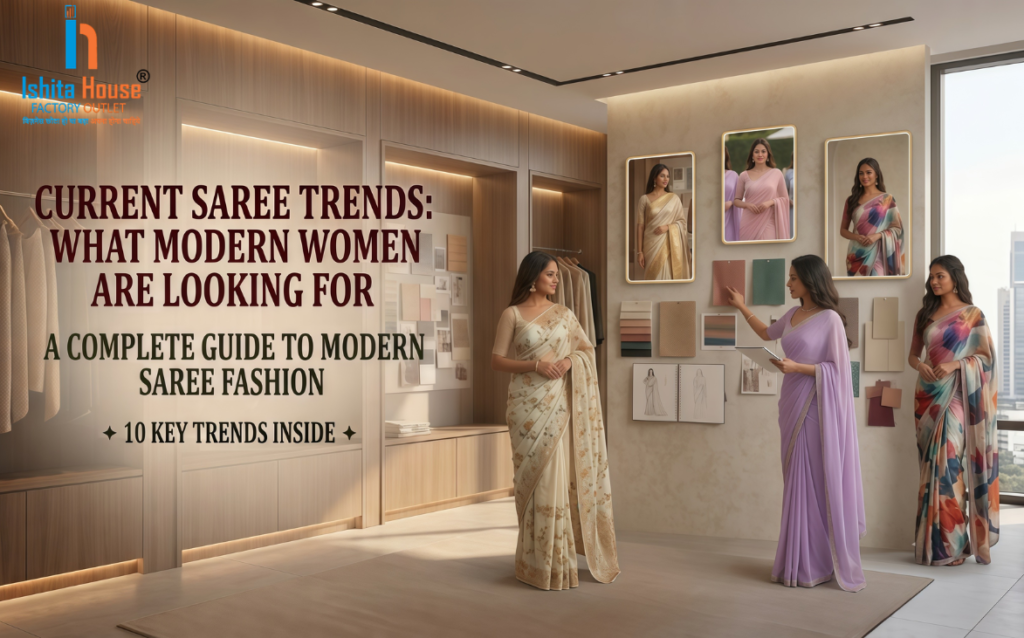
The saree has successfully moved from traditional wardrobes into modern fashion. Today’s saree is not limited to weddings or festivals. Women are wearing sarees for parties, office events, social gatherings, celebrations and even contemporary fashion occasions.
As fashion preferences continue to evolve, saree manufacturers are introducing designs that combine traditional craftsmanship with modern aesthetics.
Here are some important saree trends shaping contemporary collections.
1. Lightweight Sarees
One of the strongest trends is the preference for lightweight sarees.
Modern customers often want sarees that look elegant without feeling too heavy. Lightweight georgette, chiffon, organza and blended fabrics are therefore increasingly popular.
These sarees are particularly useful for women who want to wear sarees for several hours.
2. Pastel Colours
Pastel shades have become an important part of modern Indian fashion. Colours such as blush pink, lavender, powder blue, peach, ivory and soft green offer a subtle and sophisticated appearance.
Pastel sarees can work particularly well for daytime weddings, engagements, festive celebrations and social events.
3. Floral Prints
Floral designs remain popular across different saree categories. Modern digital printing technology allows manufacturers to create detailed floral patterns with multiple colours and artistic effects.
Large flowers, delicate botanical motifs and abstract floral designs provide different options for different customer preferences.
4. Minimalist Sarees
Not every customer wants heavy embroidery. Minimalist sarees featuring clean borders, subtle prints and limited embellishment are increasingly attractive to customers who prefer understated fashion.
Such sarees can also be styled differently for different occasions, increasing their versatility.
5. Sequin and Shimmer
For parties and evening functions, sequin work and subtle shimmer continue to be popular.
Instead of extremely heavy embellishment, many modern designs use smaller decorative elements to create a sophisticated shine. These sarees can be paired with simple jewellery and modern blouses.
6. Statement Blouses
The blouse has become an important fashion element. Designer necklines, statement sleeves, back designs, embroidery and contrasting fabrics can transform a relatively simple saree into a fashionable outfit.
Some women deliberately choose a simple saree with a striking blouse for a contemporary look.
7. Contemporary Prints
Digital printing has opened new possibilities for saree design. Manufacturers can experiment with artistic patterns, geometric designs, abstract motifs and modern colour combinations.
This is especially attractive to younger customers looking for sarees that feel different from traditional collections.
8. Traditional Designs With a Modern Twist
Traditional Indian motifs remain important, but they are increasingly being presented in contemporary ways.
Traditional borders, motifs and embroidery can be combined with modern fabrics, pastel colours and minimalist designs.
This creates sarees that appeal to both traditional and contemporary customers.
9. Versatile Sarees
Today’s customer often wants value from every purchase. A saree that can be worn at a family function, dinner party or festive event may be more attractive than a highly specialised outfit.
Versatility is therefore becoming an important consideration in saree design.
10. What This Means for Saree Manufacturers
Manufacturers need to understand that customers are becoming more selective. They are looking for a combination of design, quality, comfort and affordability.
A successful saree collection should therefore offer variety rather than focusing on one particular style.
For saree manufacturers in Surat, the city’s strong textile infrastructure provides opportunities to experiment with fabrics, prints, embroidery and new fashion concepts.
Conclusion
The saree is evolving, but it is certainly not disappearing. The future of saree fashion lies in combining India’s traditional textile heritage with contemporary design.
Lightweight fabrics, pastel colours, digital prints, minimalist embroidery, statement blouses and versatile styling are likely to remain important areas of modern saree fashion.
For customers, this means more choices than ever before.