The saree is much more than a piece of fabric. Across India, the way a saree is draped can reveal regional traditions, cultural identity and even the practical needs of everyday life.
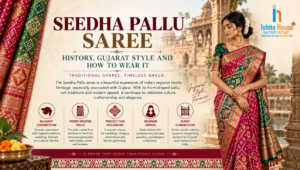
One of the most recognisable regional styles is the Seedha Pallu saree, particularly associated with Gujarat and also seen in parts of Uttar Pradesh and Odisha.
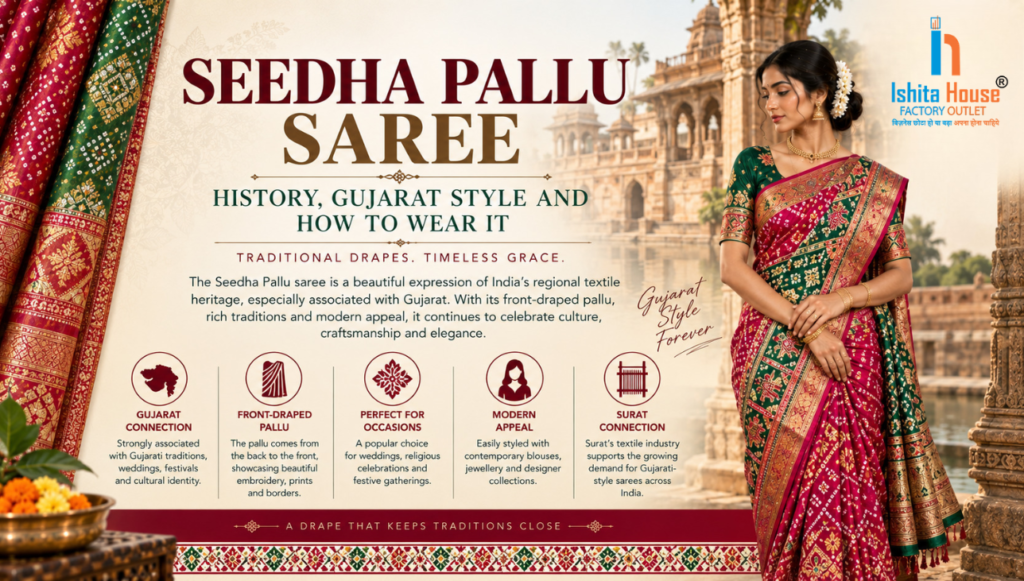
The style is visually distinctive because the pallu comes from the back toward the front and is arranged over the shoulder.
What Is a Seedha Pallu Saree?
In the Seedha Pallu style, the loose end of the saree—the pallu—is brought from the back toward the front and placed over the shoulder.
The pallu is then arranged across the front of the body.
This creates an attractive display of the saree’s embroidery, print or decorative border. The technique is particularly useful for sarees with elaborate pallus because it allows the decorative portion to remain visible.
The Gujarat Connection
The Seedha Pallu style is strongly associated with Gujarati saree dressing.
It is particularly visible in traditional Gujarati communities and during weddings, festivals and religious celebrations.
For many women, the style is more than a fashion choice—it is connected with cultural identity and family traditions.
Why Is the Pallu Worn in the Front?
One practical advantage of the Seedha Pallu is that it places the decorative portion of the saree prominently across the front.
Traditional Gujarati sarees often feature detailed pallus, borders and decorative motifs. Bringing the pallu to the front allows these elements to become a central part of the overall appearance.
Seedha Pallu and Gujarati Weddings
The style has a particularly strong presence during Gujarati wedding celebrations.
Brides and female members of the family may choose sarees with elaborate embroidery, traditional motifs, rich borders and decorative pallus.
The Seedha Pallu arrangement gives these details a prominent position.
Modern Seedha Pallu Fashion
Although the style has traditional roots, it has adapted to modern fashion.
Today, women may wear Seedha Pallu sarees with contemporary blouses, statement jewellery and modern accessories.
Designer sarees, printed sarees and embellished collections can all be styled using this drape.
Surat’s Connection With the Gujarati Saree
Surat is one of India’s largest textile manufacturing and distribution centres. The city’s saree industry serves customers throughout Gujarat and across the country.
Gujarati-style sarees are therefore an important part of the wider textile market associated with Surat.
Manufacturers can create collections with traditional Gujarati visual elements while using modern fabrics, printing and embroidery techniques.
Which Sarees Work Well With Seedha Pallu?
The Seedha Pallu style can work particularly well with sarees featuring:
- Heavy borders
- Decorative pallus
- Bandhani-inspired designs
- Embroidery
- Zari-style work
- Traditional Gujarati motifs
- Printed patterns
The drape allows these elements to become highly visible.
Seedha Pallu Beyond Gujarat
Although strongly associated with Gujarat, variations of front-pallu draping can be found in other Indian regions.
This illustrates an important characteristic of Indian saree culture: draping styles often cross geographical boundaries and develop regional variations.
Conclusion
The Seedha Pallu saree is one of the most recognisable draping styles associated with Gujarat. Its front-facing pallu highlights the decorative elements of the saree while creating a distinctive traditional appearance.
From Gujarati weddings and festivals to contemporary fashion, the style continues to evolve while maintaining its strong regional identity.
Its adaptability to different fabrics, designs and occasions demonstrates how traditional saree drapes can remain relevant across generations.