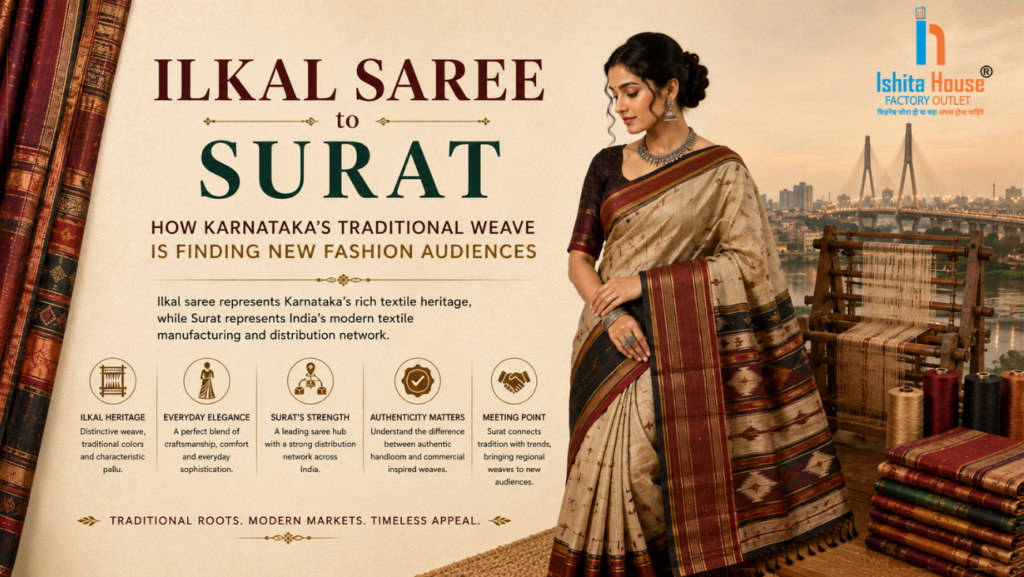
Surat: Karnataka’s Ilkal saree is known for its distinctive weaving traditions, traditional colours and characteristic pallu. Originating from the Ilkal region, these sarees have long been part of Karnataka’s textile heritage.
Today, regional saree traditions such as Ilkal are increasingly reaching consumers outside their traditional markets, including through India’s major textile centres such as Surat.
The Heritage of ILKAL Sarees
Ilkal sarees are traditionally associated with Karnataka. Their characteristic appearance comes from distinctive weaving and construction techniques, including the traditional joining of the body and pallu.
Traditional designs may include stripes, checks and regional motifs.
A Saree Designed for Everyday Elegance
Unlike some heavily embellished wedding sarees, traditional Ilkal sarees can offer a practical combination of colour, craftsmanship and comfort.
This makes them attractive to customers who appreciate traditional clothing that can also be worn regularly.
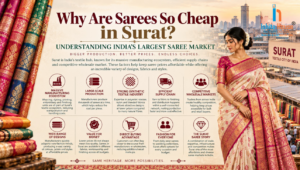
Surat’s Expanding Saree Market
Surat has become an important centre for saree production and distribution.
Manufacturers and wholesalers offer products across multiple categories, allowing regional styles and design influences to enter wider commercial markets.
The city’s strong distribution network helps connect textile products with retailers across India.
The Importance of Authenticity
As regional sarees become more popular, consumers should understand the difference between an authentic traditional handloom product and a commercially produced saree inspired by a particular style.
Both have their own markets, but they should not be represented as the same product.
Surat as a Meeting Point
Surat’s textile ecosystem can be viewed as a meeting point for different fashion influences.
Manufacturers can observe trends from across India and create collections suited to changing consumer preferences.
This makes the city important not only for production but also for the movement of saree fashion across regional boundaries.
Conclusion
Ilkal sarees represent Karnataka’s rich textile heritage, while Surat represents India’s modern textile manufacturing and distribution network.
Their connection reflects the growing national interest in regional saree traditions.
As consumers continue to explore Indian textiles from different regions, designs such as Ilkal can find new audiences while their original cultural and craft identities remain important.