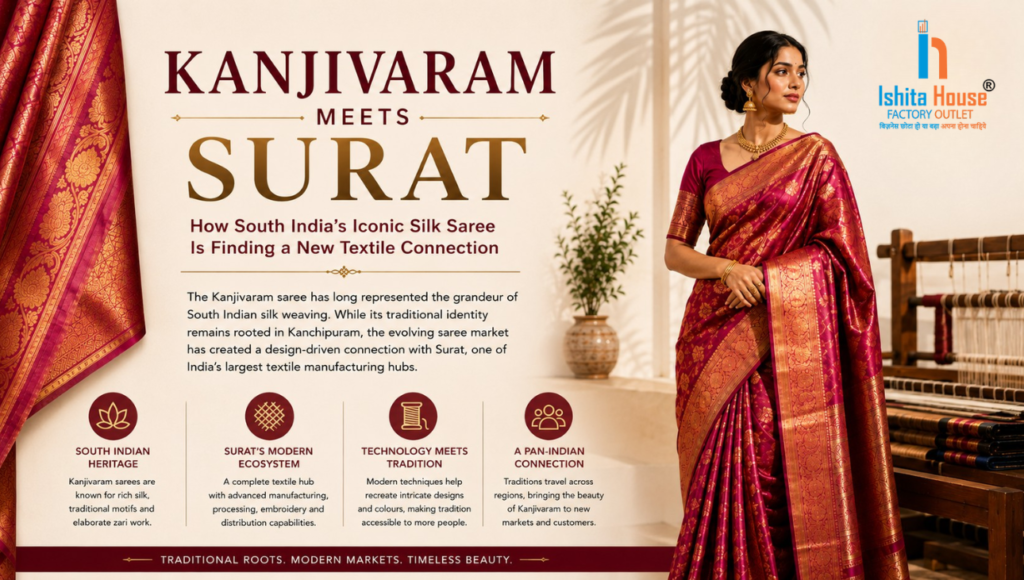
Surat: The Kanjivaram saree has long represented the grandeur of South Indian silk weaving. Originating from Kanchipuram in Tamil Nadu, the saree is recognised for its rich silk, distinctive borders, traditional motifs and association with weddings and major celebrations.
While its traditional identity remains firmly connected with Kanchipuram, the changing Indian saree market has created an interesting connection with Surat, one of the country’s largest textile manufacturing centres.
The connection is primarily commercial and design-oriented rather than historical.
Kanjivaram’s Traditional Identity
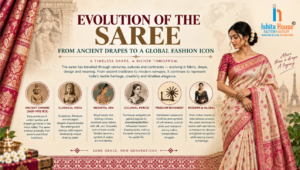
Traditional Kanjivaram sarees are known for their silk fabric and elaborate zari work. Temple-inspired borders, peacocks, flowers, paisley motifs and traditional geometric patterns are among the designs associated with the style.
For generations, these sarees have been particularly popular among brides and families looking for a traditional wedding wardrobe.
Surat’s Role in the Modern Saree Market
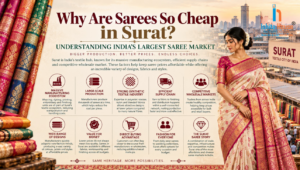
Surat has developed a large textile ecosystem covering fabric production, processing, dyeing, printing, embroidery, finishing, wholesale and distribution.
As consumer preferences have changed, manufacturers and designers in Surat have increasingly created sarees inspired by different Indian textile traditions.
South Indian-inspired designs are part of this wider trend.
Technology Meets Tradition
Modern textile technology has made it possible to reproduce intricate motifs and colour combinations on different fabrics.
Printing, embroidery and embellishment techniques allow manufacturers to experiment with traditional-inspired patterns.
Surat’s strength lies in this ability to translate fashion ideas into products for a mass market.
Conclusion
Kanjivaram and Surat represent two different strengths of India’s saree ecosystem. Kanchipuram preserves a distinctive silk-weaving tradition, while Surat has developed a modern textile manufacturing and distribution network.
The growing presence of Kanjivaram-inspired designs in Surat’s market reflects a larger trend: Indian saree traditions are increasingly crossing regional boundaries while retaining their distinctive identities.