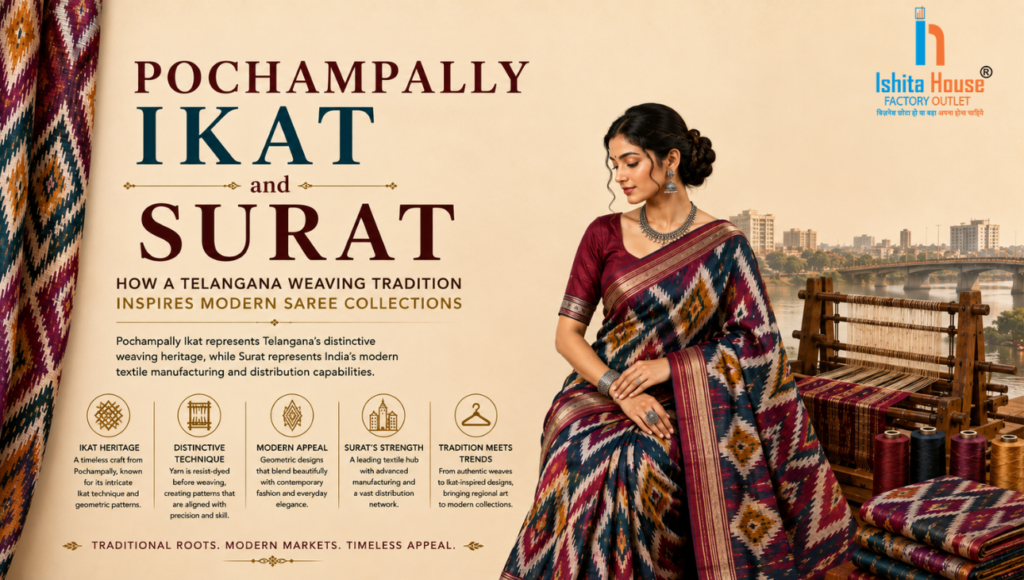
Surat: Pochampally Ikat is one of India’s most recognisable textile traditions. Associated with Telangana, the craft is known for its distinctive geometric patterns created through the complex Ikat technique.
As interest in India’s regional textiles grows, the visual language of Ikat is increasingly appearing in modern saree collections across the country, including markets connected with Surat.
What Is Pochampally Ikat?
Pochampally is particularly associated with Ikat weaving. Ikat involves a resist-dyeing process in which yarns are tied and dyed before weaving, creating distinctive patterns when the fabric is constructed.
The technique requires skill and precision. Its geometric appearance has become one of the defining characteristics of Pochampally textiles.
Why Ikat Is Popular Today
Modern consumers are increasingly interested in textile stories and traditional craftsmanship.
Ikat’s distinctive patterns make it visually different from conventional floral prints and heavily embellished sarees. Its geometric character also fits contemporary fashion.
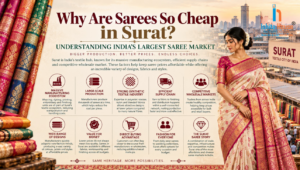
Surat’s Role in Textile Fashion
Surat has a large textile manufacturing and distribution ecosystem. The city works with numerous fabrics, designs and production technologies.
As retailers seek new collections, regional design influences such as Ikat can become part of broader fashion trends.
Traditional Craft Meets Modern Interpretation
There is an important distinction between authentic Pochampally handloom Ikat and a saree that simply uses an Ikat-inspired print.
The original craft involves a specialised weaving process and has a specific geographical and cultural identity.
Modern manufacturers may interpret its visual language through printing or other textile techniques. Both products can serve different consumer needs, but accurate labelling is important.
Why Retailers Are Watching Regional Designs
Retailers increasingly need differentiated products. Customers have access to thousands of saree designs online, making uniqueness valuable.
Ikat-inspired patterns provide an opportunity to introduce geometric and artistic designs into contemporary collections.
Conclusion
Pochampally Ikat represents Telangana’s distinctive weaving heritage, while Surat represents India’s modern textile manufacturing and distribution capabilities.
The growing popularity of Ikat-inspired sarees demonstrates how traditional textile ideas can travel across geographical boundaries and find new interpretations in contemporary fashion.