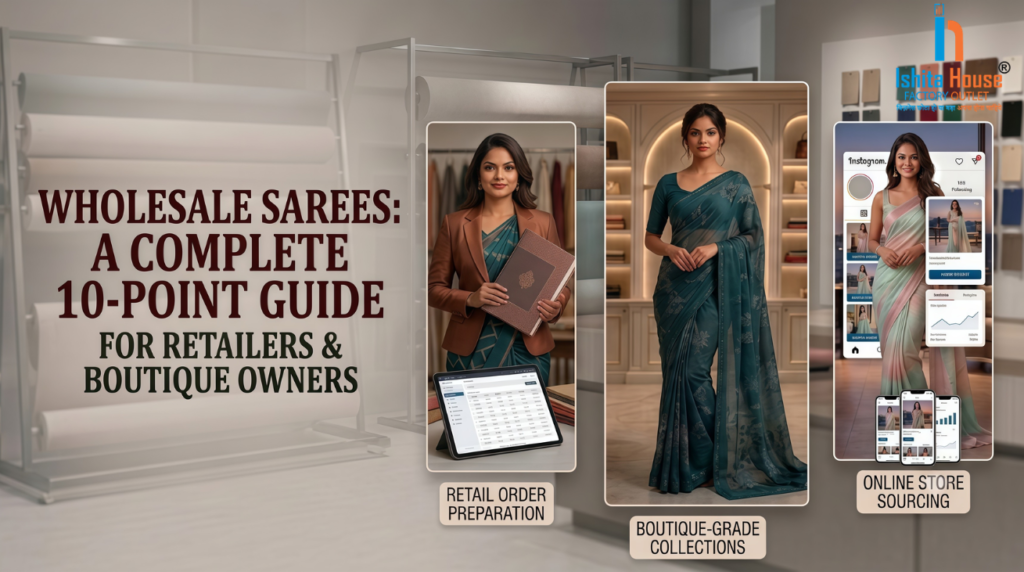
The saree business offers significant opportunities for retailers, boutiques and online fashion stores. However, sourcing the right products at the right price is one of the most important parts of running a successful saree business.
Wholesale saree purchasing allows retailers to access multiple designs and price ranges while maintaining a competitive retail margin.
For businesses looking for wholesale sarees, Surat is one of India’s major sourcing destinations.
1. What Are Wholesale Sarees?
Wholesale sarees are generally sold to businesses purchasing products for resale. Retailers, boutiques, distributors, online sellers and fashion stores commonly purchase sarees through wholesale channels.
Wholesale buying can provide access to larger collections and competitive pricing compared with individual retail purchasing.
However, wholesale buyers should evaluate more than just price.
2. Why Surat Is Important for Wholesale Sarees
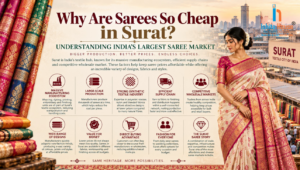
Surat has a highly developed textile ecosystem. Manufacturers, processors, embroidery units, wholesalers and distributors operate within a large network.
This allows businesses to source different categories of sarees from one major textile centre.
Retailers can explore everything from daily wear sarees to designer, party wear and festive collections.
3. What Should Retailers Check?
Quality should always be a priority. Before placing a large order, retailers should examine:
- Fabric quality
- Colour accuracy
- Stitching and finishing
- Embroidery quality
- Border finishing
- Blouse-piece quality
- Packaging
- Product consistency
A low purchase price does not necessarily mean a profitable product if customers are unhappy with the quality.
4. Understand Your Customers
Different retail markets have different requirements. A boutique serving urban customers may need contemporary designer sarees, while a traditional clothing store may sell more silk-inspired or festive collections.
Before purchasing wholesale sarees, analyse what your customers are already buying. Look at colours, fabrics, price points and designs that perform well.
5. Build a Balanced Collection
Retailers should avoid purchasing too many similar designs.
A balanced collection can include:
- Daily wear sarees
- Office wear sarees
- Party wear sarees
- Wedding sarees
- Festive sarees
- Designer collections
- Lightweight sarees
- Traditional styles
This gives customers more reasons to visit your store.
6. Consider Seasonal Demand
Saree demand often changes according to festivals, wedding seasons and regional celebrations. Retailers should plan inventory in advance.
Festive collections should ideally be sourced before demand reaches its peak. Similarly, wedding-focused collections can be planned around major wedding seasons.
7. Wholesale Sarees for Online Businesses
Online saree businesses have grown rapidly. Instagram stores, marketplaces and independent websites allow retailers to sell sarees across India.
For online businesses, product photography is particularly important. Customers need clear images showing the fabric, print, border, blouse piece and overall appearance.
Accurate product descriptions are equally important.
8. Work With a Reliable Manufacturer
A long-term relationship with a reliable saree manufacturer in Surat can make sourcing easier. Manufacturers who understand a retailer’s requirements can help businesses maintain consistency across collections.
Good communication is important regarding quantities, colours, designs, delivery schedules and quality expectations.
9. Don’t Compromise on Packaging
Packaging is part of the customer experience. For premium or designer sarees, attractive and secure packaging can enhance the perceived value of the product.
Packaging should also protect the saree during transportation.
10. Build a Long-Term Supplier Relationship
Wholesale saree sourcing should not be treated as a one-time purchase. Building a long-term relationship with a reliable manufacturer or supplier can make future sourcing more efficient.
Once you find a supplier who consistently delivers good quality, timely orders and suitable designs, maintaining clear communication can help both businesses work together more effectively.
A strong supplier relationship can also make it easier to discuss new collections, customisation requirements, seasonal demand and future orders.
Wholesale saree sourcing requires a combination of market understanding, quality control and good supplier relationships. Surat’s textile industry provides retailers with access to a wide range of saree designs and manufacturing capabilities.
Whether you run a physical boutique, wholesale business or online saree store, selecting the right products and building a reliable supply chain can help create a sustainable business.